
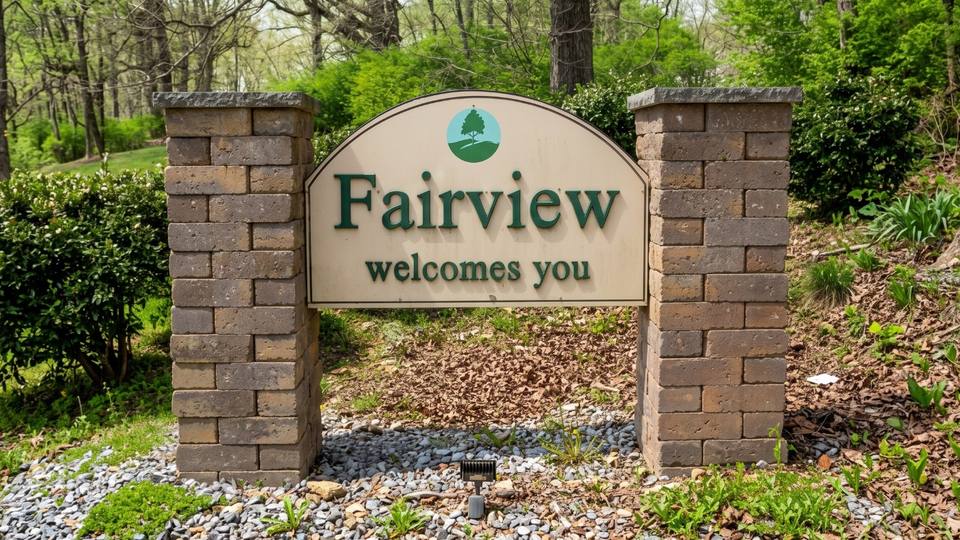
It is easy to look at modern Fairview and tell its story through what is being built. New neighborhoods appear. Traffic grows along Highway 100. Businesses open. Schools add students. Roads that older residents remember as quiet country routes carry thousands of vehicles.
But long before Fairview became a growing Nashville-area community, this corner of Williamson County had an economy and identity of its own, and some of what it was known for might surprise you: timber, handmade chairs, tomatoes and, as the city's comprehensive plan notes, even a little moonshine.
Settlements before a town
The community we now call Fairview did not originally develop as one clearly defined town. The City of Fairview's comprehensive plan describes the area as a collection of smaller settlements scattered across Williamson County's First District, with names including Christiana, Barren, Jingo, Naomi and Pasadena.
For much of the 1800s and early 1900s, post offices were among the best markers of where these communities existed. According to the city's historical summary, the First District's first post office was established in 1839 in an area known as Barren. The first post office in what is now Fairview proper was established as Christiana in 1858. Its name was changed to Jingo in 1880, and then, in 1937, it became Fairview.
That means the name "Fairview" is relatively new compared with the history of the community surrounding it. The city itself would not formally incorporate until 1959.
A hard place to reach and a hard place to farm
Before that, life here was shaped heavily by the land. Fairview sits along the western edge of the Highland Rim, and the rolling, sometimes steep terrain that residents know today made this part of Williamson County relatively difficult to reach from Franklin and other communities.
The soil also presented challenges for early agriculture. The city's comprehensive plan says the area is believed to have been settled in the early 1800s, including by Revolutionary War veterans, but the land was not ideal for many traditional crops.
Timber
What the land did have was trees, lots of them. Fairview and the surrounding First District contained an abundance of hardwood timber, and timber harvesting became one of the area's most valuable early industries.
It is difficult to imagine now, especially when looking at heavily wooded places around Fairview, but large areas were once cut extensively for timber. That industry provided both raw material and employment.
Chairs
Timber also led naturally to another Fairview-area specialty: chair making. Fairview Forward, the city's 2040 Comprehensive Plan, notes that the abundance of hardwoods supported several chairmakers in the area.
This was not just a Williamson County curiosity. Western Williamson County was home to notable furniture craftsmen. The Tennessee State Museum documents, for example, the work of Richard "Dick" Poynor (1802 to 1882), who was born enslaved and was a free man by the 1850s. The local history site Lovely Franklin places his farm and chair shop on Pinewood Road near Leiper's Fork, in a different part of western Williamson County from Fairview. The museum says he and his son James made hundreds of chairs.
The conversation
No comments yet